SCIFR
Sodium-Chloride
Integral Fast Reactor
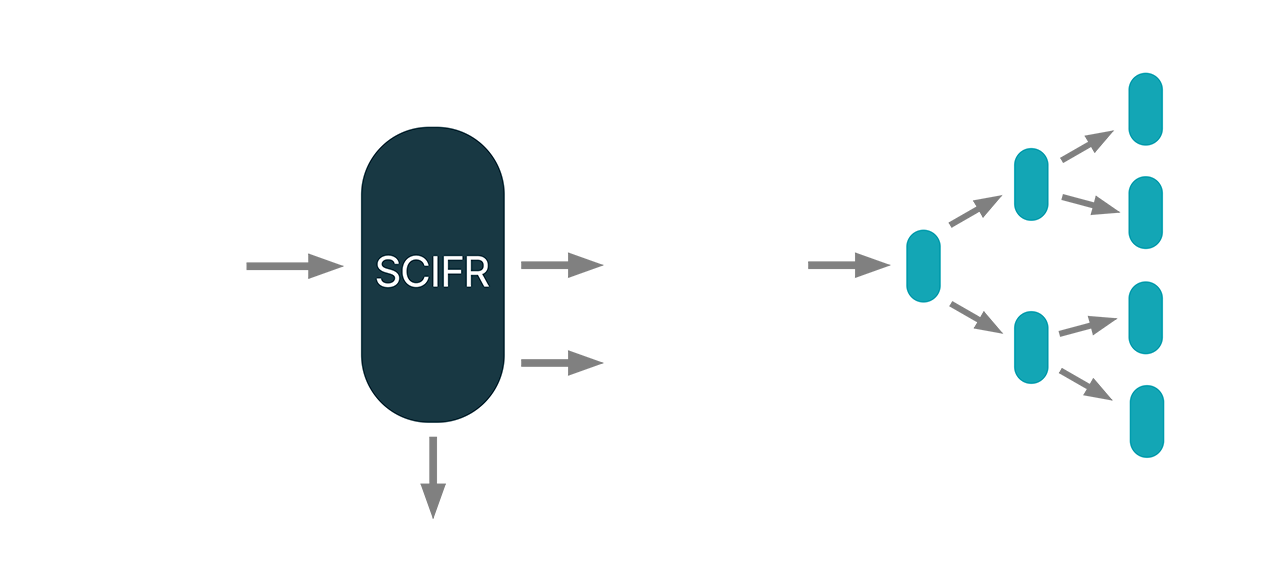
Waste In
SCIFR consumes transuranic waste from today's reactors, turning a long-lived disposal liability into useful fuel.
A Bridge to Sustainability
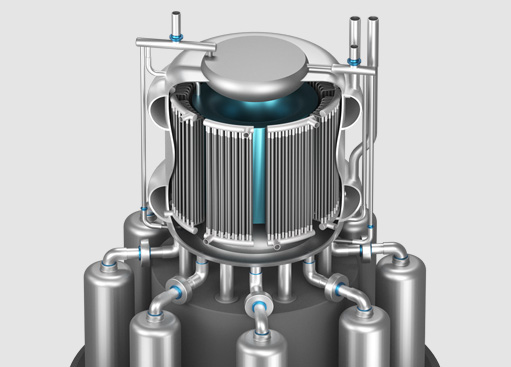
SCIFR is the bridge between where we are and where we're going. Using a fast neutron spectrum and a liquid chloride fuel salt, it fissions transuranic isotopes from spent commercial fuel while generating the new fuel needed to commission the next generation of sustainabel liquid-fluoride thorium reactors (LFTRs). Electricity is produced along the way.
Fuel Out
SCIFR creates the startup fuel needed to bring sustainable reactors online, powered only by natural thorium.
Fast Spectrum
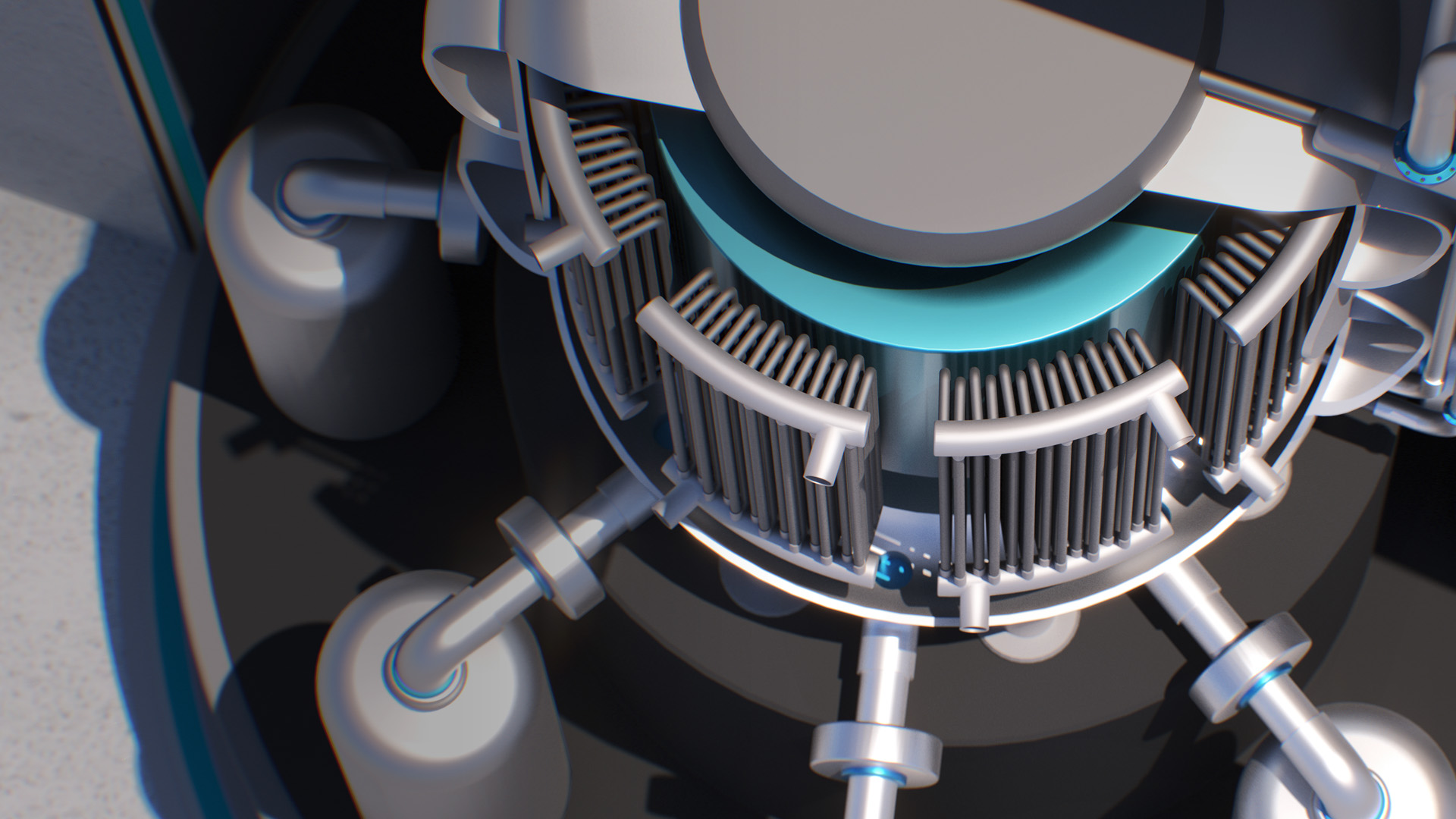
The fast neutron spectrum is well-suited to eliminating the long-lived materials that drive spent-fuel disposal liabilities through fission, thus a liquid chloride reactor has no moderator.
>40% Efficiency
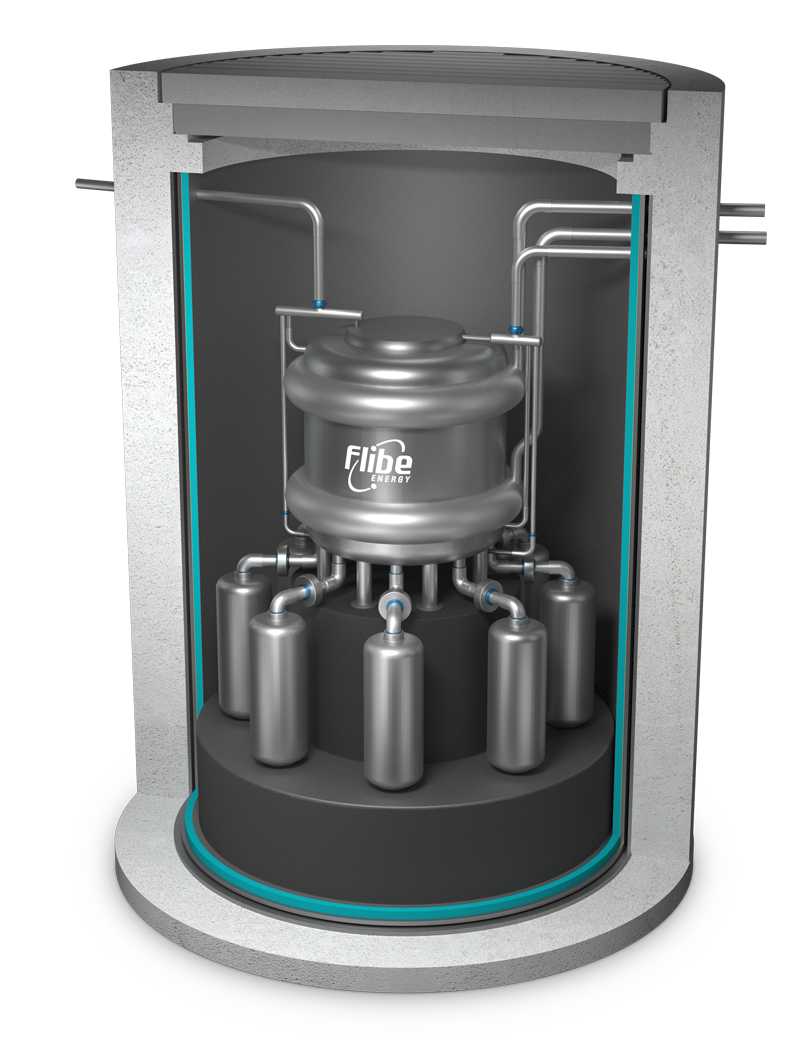
SCIFR converts thermal power into electricity at high efficiency by coupling with a supercritical CO₂ gas-turbine engine.

Water Optional
SCIFR couples to an sCO₂ power conversion system like our other reactors, opening the door to very low-water cooling or dry cooling; thus decoupling reactor siting from available water sources lets us bring the energy solution to the problem.
Closing the Loop
From today's waste to tomorrow's fuel.
Decades of light-water reactor operation have produced a global inventory of spent fuel that remains radiotoxic for hundreds of thousands of years — driven almost entirely by its transuranic content. SCIFR is designed to fission those transuranics directly in a fast neutron spectrum, dramatically shortening the radiological burden while extracting their energy.
In parallel, natural thorium is introduced into the fuel as a tetrachloride. It absorbs neutrons and transforms into new fuel to start a sustainable thorium reactor. SCIFR turns the present nuclear waste problem into the seed stock for a sustainable thorium future.
Technical Details
SCIFR Specifications
SCIFR pairs a fast-spectrum chloride molten-salt core with the same sCO₂ Brayton power conversion family used across the Flibe reactor lineup. The specifications below reflect the current design point; values continue to evolve as the conceptual design matures.
Reactor
SCIFR
Power
TBD MWe
Neutron Spectrum
Fast
Power Conversion System
sCO₂ Brayton
Cooling Options
Dry or Wet
Efficiency
> 40%
Reactor Outlet Temp
700°C
Reactor Inlet Temp
500°C
Reactor Pressure
< 10 bar
Reactor Structure
TBD (chloride-compatible alloy)
Fuel Salt
TRU + Th chlorides